

Discover why Finance Controllers are outsourcing payroll to improve compliance, reduce risk, and support business growth.
For many Finance Controllers, payroll is one of those critical business functions that must be right every time. Employees expect to be paid accurately and on time, HMRC expects compliant reporting, and leadership teams expect efficient cost management.
Yet as businesses grow, payroll can become increasingly complex, time-consuming, and risky to manage internally.
A recent enquiry we received from a Finance Controller looking for a fully managed payroll service perfectly highlights the challenges many UK businesses face today. The requirements included payroll processing, pension administration, Benefits in Kind (BiKs), P11D preparation, RTI submissions, starter and leaver management, employee self-service, and a dedicated payroll contact.
The reality is that payroll is no longer just about processing salaries. It’s a critical business function that impacts compliance, employee experience, and operational efficiency.
Why More Finance Controllers Are Outsourcing Payroll
Finance Controllers are under increasing pressure to deliver accurate financial reporting, improve efficiency, manage compliance risks, and support business growth.
At the same time, payroll complexity continues to rise due to:
- HMRC reporting requirements
- Real Time Information (RTI) submissions
- Workplace pension regulations
- National Minimum Wage changes
- Benefits in Kind reporting
- Statutory payments and leave management
- Ongoing employment law changes
Managing these responsibilities internally often pulls finance teams away from higher-value activities such as forecasting, budgeting, cash flow management, and strategic planning.
Outsourcing payroll allows Finance Controllers to focus on what they do best: supporting business performance and growth.
The Hidden Cost of Managing Payroll In-House
Many businesses assess payroll based only on software costs. However, the real cost often includes the time spent by finance, HR, and management teams. For a business with around 5–25 employees, internal payroll administration can easily consume 10 – 12 hours per month, depending on complexity. Over a year, that’s between 48 and 150 hours that could be spent on more strategic finance activities.
Internal Administration Time
Payroll frequently requires input from:
- Finance teams
- HR departments
- Directors and managers
Every payroll cycle involves gathering data, verifying employee changes, reviewing calculations, obtaining approvals, and resolving queries.
Compliance Risk
Mistakes can result in:
- HMRC penalties
- Late filing charges
- Pension compliance issues
- Employee disputes
- Reputational damage
Knowledge Dependency
Many organisations rely heavily on one or two individuals who understand payroll processes. If those employees leave or are unavailable, payroll continuity can quickly become a risk.
What Does That Mean Financially?
For a Finance Controller earning the equivalent of £35–£60 per hour, that’s approximately: £2,700–£9,500 of internal management time annually.
before considering:
- HMRC compliance risks
- Employee experience
- Business continuity
- Opportunity cost
In other words, outsourcing payroll can return over two to four working weeks per year to your finance team time that can be invested in growing the business rather than administering it.
What Finance Controllers Should Look for in a Payroll Provider
Choosing a payroll partner isn’t simply about finding the lowest price. Finance Controllers should look for a provider that delivers expertise, compliance, scalability, and service quality.
Fully Managed Payroll Processing
A quality provider should handle:
- Monthly payroll processing
- Payslip production and distribution
- RTI submissions to HMRC
- PAYE calculations
- National Insurance Calculations
- Statutory payment processing
This reduces administrative burden while improving accuracy.
Time saved through outsourcing:
Approximately 24–48 hours annually. This allows finance teams to spend more time on budgeting, forecasting, and management reporting.
Pension Administration
Many employers underestimate the workload involved in workplace pension compliance. An outsourced payroll provider should be able to:
- Assess pension eligibility
- Calculate pension contributions
- Produce pension reports
- Submit contribution files directly to providers
- Support auto-enrolment compliance
For businesses using providers such as Standard Life, integrated pension submission support can save significant time.
Time saved through outsourcing:
Approximately 12–24 hours annually.
Starter and Leaver Management
Every payroll cycle involves employee changes.
A managed service should support:
- New starter processing
- P45 management
- HMRC starter declarations
- Leaver processing
- Final payments
- P45 generation
This ensures employee records remain accurate and compliant. A company with moderate employee turnover can spend: 6–12 hours annually simply managing payroll changes.
Benefits in Kind and P11D Support
Benefits reporting is becoming increasingly important, particularly with HMRC’s move towards mandatory payrolling of benefits.
Finance Controllers should confirm:
- Whether P11D preparation is included
- How Benefits in Kind are managed
- Whether additional charges apply
- How future payrolling of benefits will be supported
A provider with expertise in both current and future requirements can reduce risk significantly.
Time saved through outsourcing:
Up to 15 hours per year. With mandatory payrolling changes approaching, this time requirement is expected to increase for many employers.
Holiday and Absence Management Becomes Easier
Holiday management is often underestimated as a payroll task, but it can consume a significant amount of administrative time particularly as businesses grow.
Employers must accurately track annual leave entitlements, holiday accruals, carry-over balances, sick leave, parental leave, and unpaid absences. UK workers are generally entitled to 5.6 weeks’ paid holiday per year, and calculating entitlement can become more complex for part-time employees, irregular workers, and varying work patterns.
Many outsourced payroll providers can work alongside your HR or leave management processes to ensure holiday balances, absence records, and payroll calculations remain aligned. This reduces the risk of payroll errors, overpayments, underpayments, and employee disputes relating to holiday pay. Accurate leave tracking also helps managers plan resources more effectively and gives employees greater visibility of their remaining entitlement.
Typical Internal Time Requirement
For businesses with 20–50 employees, holiday administration can easily consume:
- Reviewing holiday requests
- Tracking remaining entitlement
- Managing carry-over balances
- Calculating holiday pay
- Reconciling leave records with payroll
1–3 hours per month
Time saved through outsourcing:
Approximately 12–36 hours annually.
For Finance Controllers, this means less time spent reconciling leave records and payroll calculations and more time focused on forecasting, reporting, and business growth initiatives.
Dedicated Payroll Support
One common frustration among businesses is dealing with different contacts every month.
A dedicated payroll manager or account contact provides:
- Consistency
- Faster issue resolution
- Better understanding of your business
- Improved service quality
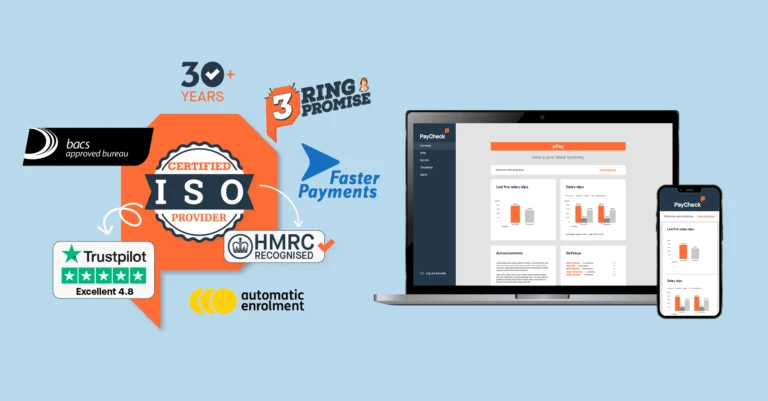
Many Finance Controllers value having direct access to an experienced payroll specialist who understands their organisation. That’s why PayCheck provides a dedicated payroll support team backed by our 3 Ring Promise—every client call is answered within three rings, giving you immediate access to expert assistance without long wait times or automated call queues.
Payroll Software Compatibility Matters
Many businesses worry that outsourcing payroll will require changing accounting systems. A good payroll provider should be able to work alongside existing platforms without forcing major system changes.
Whether the business uses:
- Xero
- Sage
- QuickBooks
- Microsoft Dynamics
- NetSuite
- Other finance systems
the payroll provider should fit into the existing finance ecosystem rather than requiring wholesale changes.
Employee Experience Matters Too
Payroll doesn’t just impact finance teams. Employees increasingly expect digital access to payroll information.
Modern payroll services often include:
- Electronic payslips
- Secure employee self-service portals
- Access to year-end documents
- Online P60 delivery
- Historical payroll records
Providing a better employee experience reduces payroll-related enquiries and supports employee engagement.
Why Payroll Approval Workflows Are Important
Finance Controllers need visibility and control before payroll is finalised. A robust payroll approval process typically includes:
- Payroll preparation
- Pre-payroll reports
- Client review
- Approval sign-off
- Final payroll processing
- HMRC and pension submissions
This ensures errors are identified before payroll is completed.
How Outsourced Payroll Supports Business Growth
The most successful Finance Controllers don’t view payroll outsourcing as simply an administrative decision. They view it as a strategic investment.
Benefits include:
More Time for Strategic Finance
Instead of processing payroll, finance teams can focus on:
- Budgeting
- Forecasting
- Cash flow management
- Business analysis
- Growth initiatives
Reduced Operational Risk
Specialist payroll providers stay on top of changing regulations and compliance requirements.
Improved Scalability
As employee numbers grow, payroll complexity increases.A professional payroll provider can scale services without requiring additional internal resources.
Better Cost Predictability
Outsourced payroll typically operates through clear service agreements, helping businesses forecast costs more effectively.
How PayCheck Supports Finance Controllers
At PayCheck, we work with Finance Controllers, Finance Directors, and business owners across the UK to deliver fully managed payroll services.
Our services include:
✅ Payroll processing
✅ HMRC submissions
✅ Pension administration
✅ P11D preparation
✅ Starter and leaver management
✅ Electronic payslips
✅ Dedicated payroll specialists
✅ Employee self-service solutions
With more than 30 years of payroll expertise, we help businesses reduce risk, improve efficiency, and free finance teams to focus on driving business growth.
Speak to our Payroll Masters
If you’re reviewing your current payroll arrangements or considering outsourcing for the first time, our payroll master would be happy to discuss your requirements and demonstrate how a managed payroll solution can support your business.

Insights from Payroll Master
Mark Sapsford | Sr.Business Development Manager