
Launching a startup means making decisions quickly.
You are hiring your first employees, winning customers, managing cash flow, speaking to investors and building processes often without dedicated HR, finance or payroll teams. Payroll can initially seem straightforward. You hire someone, agree their salary and pay them each month.
But UK payroll quickly becomes more complicated.
Employers need to consider PAYE, National Insurance, Real Time Information (RTI), workplace pensions, statutory payments, starters and leavers, tax codes, payslips and payroll records.
For founders without dedicated HR support, the real question therefore isn’t simply:
“Which payroll software should we use?”
It is:
“Should we run payroll ourselves or have payroll specialists manage it for us?”
This guide compares five established payroll providers available to UK startups and small businesses in 2026, including PayCheck, ADP, IRIS, Moorepay and PayEscape, and explains what founders should consider before choosing a payroll service.
Payroll Services for UK Startups: Quick Comparison
Provider | Service Model | Particularly Relevant For |
PayCheck | Fully managed payroll service + payroll software | Startups wanting experienced human payroll support without building an internal payroll team |
ADP | Payroll software + managed payroll | Startups wanting software and service options with room to scale |
IRIS Payroll Services | Fully outsourced payroll | Growing businesses wanting established payroll technology and specialist processing |
Moorepay | Payroll software + managed payroll + HR | Startups wanting payroll and wider HR capabilities |
PayEscape | Managed payroll + HR/time technology | Small businesses wanting cloud-based payroll and workforce tools |
These providers take different approaches, so there isn’t one service model that suits every startup. A founder with payroll experience may be comfortable using small business payroll software internally. A startup without HR or payroll expertise may get more value from a managed service that takes much of the operational workload away from the founding team.
Why Payroll Becomes a Challenge for UK Startups
During the earliest stage of a startup, founders often manage payroll themselves or give the responsibility to whoever handles finance.
That might work with two or three employees, but payroll complexity doesn’t necessarily grow gradually. Imagine your startup grows from five to 20 employees.
During that period, you could have employees joining and leaving, salary increases, bonuses, pension enrolments, sickness absence, maternity or paternity leave and different tax codes. Suddenly, payroll is no longer simply entering 20 salaries into a system and unlike many startup activities, payroll has a fixed deadline.
Your employees expect to receive the correct amount on payday. HMRC also requires employers operating PAYE to complete specific payroll tasks. Every time employees are paid, employers generally need to calculate relevant deductions and report pay and deductions through a Full Payment Submission (FPS) on or before payday.
For founders already balancing sales, funding, product development and recruitment, this can become an unnecessary operational distraction.
1. PayCheck – Fully Managed Payroll With Human Support
Service model: Fully managed payroll + payroll software
Particularly relevant for: Startups and small businesses that don’t want to build an internal payroll function
PayCheck takes a people-led approach to payroll outsourcing rather than simply providing automated payroll software and expecting founders to operate it themselves, PayCheck combines payroll technology with experienced payroll professionals who manage much of the process for clients.
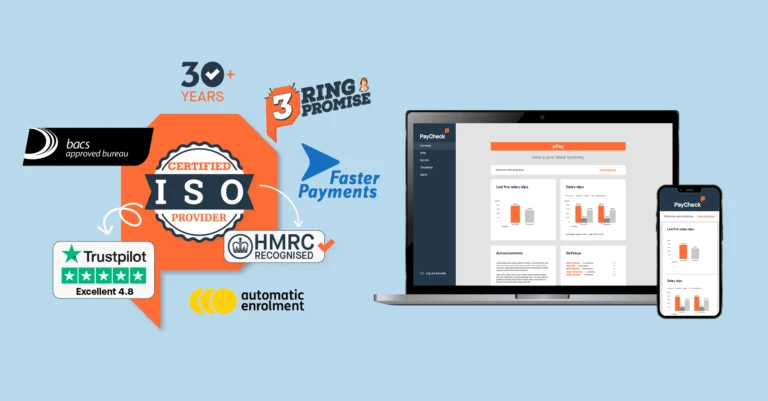
PayCheck has been providing payroll services since 1996 and supports more than 1,500 UK businesses. For a startup without dedicated HR or payroll employees, this distinction is important.
Payroll Software can perform calculations efficiently, but someone still needs to manage payroll inputs, deadlines, employee changes, statutory requirements and exceptions. With a fully managed payroll service, startups can access payroll expertise without immediately hiring an internal payroll specialist.
What Can PayCheck Support?
PayCheck’s managed payroll services can support areas including:
- Payroll calculations
- PAYE and National Insurance
- RTI submissions
- Pension auto-enrolment
- Statutory payments
- Starters and leavers
- P45s and P60s
- BACS payments
- Payroll reporting
- Payroll integrations
- Year-end payroll processes
- Human Support for Growing Businesses
One of PayCheck’s main differentiators is its emphasis on human support. Some PayCheck employees have spent more than two decades working in payroll, giving businesses access to people with significant practical experience.
PayCheck also operates its Three Ring Promise, reflecting its focus on providing clients with responsive telephone support. For a founder dealing with an urgent payroll issue immediately before payday, access to an experienced person can be just as important as the payroll technology itself.
Consider PayCheck if: You want to remove much of the day-to-day payroll workload from your startup while retaining access to experienced payroll professionals.
2. ADP – Flexible Payroll Software and Managed Services
Service model: Payroll software + managed payroll
Particularly relevant for: Startups wanting different levels of payroll ownership and potential international scalability
ADP provides several approaches to payroll. Small businesses can use payroll software to manage payroll internally, access additional payroll support or choose a fully managed service.
ADP says its small-business offering is designed to help businesses reduce payroll administration, maintain compliance and access payroll expertise as required. Its managed service is specifically designed to reduce reliance on internal payroll resources. (ADP UK)
This flexibility may appeal to startups that want to change their payroll model as they grow.
ADP’s wider international footprint may also become relevant for startups with plans to employ people in several countries.
Consider ADP if: You want a large payroll provider offering self-service, managed and international payroll options.
3. IRIS Payroll Services – End-to-End Payroll Outsourcing
Service model: Fully outsourced payroll
Particularly relevant for: Startups and growing businesses wanting established payroll technology and specialist processing
IRIS provides a fully outsourced payroll service supported by payroll professionals. Its current UK service includes a BACS-approved bureau service, CIPP-accredited payroll managers and HMRC-recognised software. (Iris)
IRIS positions outsourcing as a way for businesses to reduce internal payroll workload and concentrate resources on core business activities. It also highlights the value of outsourcing where payroll knowledge would otherwise depend on one internal employee. (Iris)
That can be relevant to startups where payroll has effectively become the responsibility of one founder or finance employee.
Consider IRIS if: You want established outsourced payroll infrastructure from a provider with a broad UK accounting, HR and payroll technology portfolio.
4. Moorepay – Managed Payroll With HR Capabilities
Service model: Payroll software + managed payroll + HR
Particularly relevant for: Startups wanting payroll alongside wider HR functionality
Moorepay offers both payroll software and fully managed payroll outsourcing. Its managed service covers areas including payroll processing, BACS, payslip distribution and reporting, with UK-based payroll support available through telephone, chat and case management. (Moorepay)
Moorepay also explicitly differentiates between software and outsourcing: software is positioned for organisations wanting to keep payroll in-house, while outsourcing is positioned for businesses without sufficient internal resources or expertise. (Moorepay)
Its wider HR capabilities may be attractive to startups beginning to formalise their people-management processes.
Consider Moorepay if: You want payroll combined with HR technology and employment-related support.
5. PayEscape – Managed Payroll for Small and Growing Businesses
Service model: Fully managed payroll + HR/time solutions
Particularly relevant for: Startups wanting payroll alongside cloud HR and time-and-attendance tools
PayEscape provides fully managed payroll services alongside HR and time-and-attendance technology.
Its managed payroll service covers areas including payroll processing, PAYE, National Insurance, pensions, electronic tax filing, employee self-service and reporting. PayEscape also highlights UK-based support and cloud delivery. (PayEscape)
Its dedicated small-business proposition is aimed at organisations from around five to 50 employees and includes payroll, HR software and time-and-attendance options. (PayEscape)
This can make the provider relevant to startups that want payroll and workforce administration to develop together as headcount grows.
Consider PayEscape if: You want a managed payroll service alongside cloud-based HR and time-management tools.
Payroll Software vs Managed Payroll for Startups
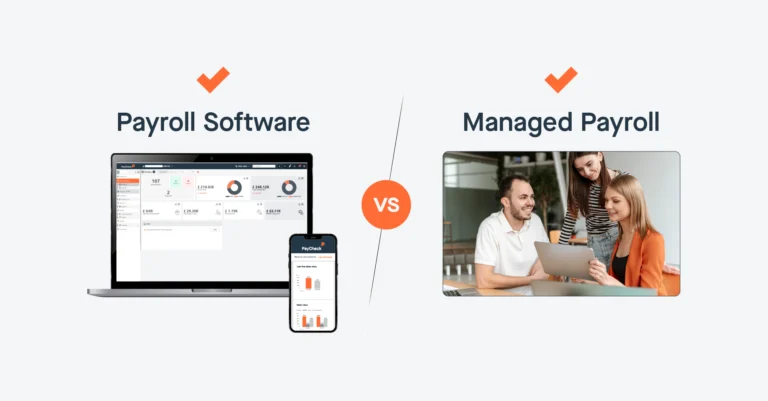
This is one of the most important decisions founders need to make. There are plenty of capable small business payroll software platforms available in the UK.
But software and managed payroll solve different problems.
Small Business Payroll Software | Managed Payroll Service |
Startup operates payroll internally | Payroll specialists manage much of the process |
Automates calculations | Combines automation with professional expertise |
Founder/team monitors payroll deadlines | Provider manages agreed payroll processes |
Internal team handles exceptions | Payroll specialists provide support |
Often lower direct software cost | Can reduce internal administration |
Works well where payroll expertise exists | Useful where there is no payroll team |
A startup with an experienced finance director or payroll specialist may prefer to retain payroll internally but many startups don’t have that resource. In that situation, purchasing payroll software can sometimes automate the calculations without solving the underlying problem: someone in the startup still has to run payroll.
Why Payroll Compliance Matters for Startups
Payroll mistakes can create problems surprisingly early in a company’s growth. HMRC requires employers operating PAYE to report employee pay and deductions through RTI. A Full Payment Submission normally needs to be sent on or before payday, and late submissions without a valid reason can lead to warnings or penalties.
Payroll rules also continue to change one significant example in 2026 is Statutory Sick Pay.
From 6 April 2026, SSP became available to eligible employees regardless of earnings and is payable from the first full day of sickness. The amount is 80% of average weekly earnings or the £123.25 weekly flat rate for 2026/27, whichever is lower.
For a startup without an HR department, changes like these have to be identified, understood and incorporated into payroll processes that’s why payroll compliance cannot simply be treated as another piece of founder admin.
The Hidden Cost of Founder-Managed Payroll
Payroll software has a visible price, but it won’t count the time valuable time spent by a founder to run the employee’s payroll.
Imagine payroll takes several hours every month once you include gathering changes, checking employee details, processing payroll, resolving discrepancies, dealing with pensions and answering employee questions.
Multiply those hours across a year then consider what that founder, finance manager or operations employee could have been doing instead.
- Selling
- Speaking to customers
- Recruiting
- Improving the product
- Managing cash flow
- Raising investment
The relevant calculation isn’t simply:
Payroll software cost vs managed payroll fee.
It should be:
Total internal payroll cost + time + compliance risk vs managed payroll cost.
That provides a much more useful comparison.
HR for Startups: Payroll Is Only One Part of the People Process
Startups searching for HR for startups often begin by looking for payroll software. That can help organise employee information, onboarding, holidays, absence and documentation.
But many HR events eventually affect payroll.
- A new employee joins
- Someone receives a promotion
- An employee receives a bonus
- Someone becomes sick
- Another employee takes parental leave
- An employee leaves
Every one of these events can create a payroll action.
For startups without dedicated HR teams, establishing a clear process between employee information and payroll is therefore essential. The objective should be to automate routine administration while making sure experienced people are available when something unusual happens.
Automated Payroll: Useful, but Not Completely Automatic
Automation has transformed payroll.
Modern payroll systems can automate calculations, apply tax information, produce payslips, generate reports and communicate information to HMRC. HMRC itself states that employers running payroll use payroll software to record pay, calculate deductions and report employee pay and deductions.
But automated payroll doesn’t mean zero-responsibility payroll.
- If an employee’s salary information is incorrect, automation can calculate the wrong salary perfectly.
- If a starter isn’t added on time, software doesn’t necessarily know that person exists.
- If absence information never reaches payroll, statutory calculations can be affected.
Technology therefore works best when combined with good processes and appropriate payroll expertise.
When Should a Startup Consider Outsourcing Payroll?
There isn’t a particular employee number at which every startup should outsource instead, look for operational warning signs.
Payroll may be ready for outsourcing when the founder is spending increasing amounts of time on it, payroll depends on one person, employee numbers are growing quickly, statutory calculations are becoming more complicated or your team is regularly asking external accountants or HMRC how to deal with payroll situations.
Another warning sign is when you’re considering hiring someone primarily because payroll administration has become difficult. At that point, compare the cost of adding internal payroll expertise with the cost of accessing a managed payroll team externally.
What Should Founders Look for in a Payroll Service?
Don’t choose a provider based solely on the lowest headline price. For startups, several factors deserve particular attention.
- Human Support: Find out whether you can speak to an experienced payroll professional when something goes wrong. This matters particularly when you don’t have payroll expertise internally.
- Payroll Compliance Expertise: Your provider should understand UK PAYE, National Insurance, RTI, workplace pensions, statutory payments and year-end processes.
- Scalability: Your startup may have eight employees today and 50 considerably sooner than expected. Make sure your payroll service can scale without requiring another disruptive migration.
- Integrations: Look at how payroll connects with your HR, accounting, time-management and other business systems.
- Security: Payroll contains highly sensitive personal and financial information. Understand how the provider protects payroll data and controls access.
- Transparent Pricing: Ask what’s included in the payroll pricing for example; Implementation, BACS, additional payroll runs, pension administration and other services can be priced differently between providers.
- Service Model: Most importantly, establish what your startup still needs to do every month. Two providers can both describe themselves as offering “managed payroll” while requiring very different levels of client involvement.
Why Startups Choose Managed Payroll
For founders without an internal HR or payroll team, managed payroll can offer several practical advantages.
- Less administration: Routine payroll processing is moved away from founders and internal teams.
- Access to payroll expertise: The startup doesn’t need to develop specialist payroll knowledge from scratch.
- Reduced key-person dependency: Payroll doesn’t stop because the one employee who understands the process is unavailable.
- Better scalability: Growing employee numbers don’t automatically mean growing an internal payroll department.
- Improved accuracy: Structured payroll processes and professional checking can help reduce avoidable errors.
- Greater compliance support: Specialists spend their working lives dealing with payroll requirements and regulatory changes.
The startup still needs to provide accurate information and approve payroll, but much of the specialist processing can be handled externally.
Why PayCheck Can Work Well for Growing UK Startups
Startups need technology but they also need payroll expertise who can help when technology isn’t enough.
PayCheck combines automated payroll technology with experienced payroll professionals, giving growing businesses access to a payroll team without needing to build one internally. We have been managing payroll since 1996, and some of our team members have spent more than two decades working in the payroll industry.
That experience matters when payroll becomes more complicated than expected. Whether you’re hiring your first employees, moving away from founder-managed payroll or scaling towards 50+ employees, the service can grow alongside the business.
And when you need help, our Three Ring Promise reflects our commitment to responsive human support.
For founders, the objective is simple: Spend less time running payroll and more time building the business.
Frequently Asked Questions About Payroll Services for Startups
What are the best payroll services for a UK startup?
The right service depends on how much payroll responsibility you want to retain. PayCheck provides payroll software and fully managed payroll with human support; ADP offers software and managed options; IRIS provides outsourced payroll; Moorepay combines payroll with HR capabilities; and PayEscape offers managed payroll alongside HR and time-management technology.
What payroll services does a small business need?
Typical requirements include salary calculations, PAYE, National Insurance, RTI reporting, workplace pensions, statutory payments, payslips, starters and leavers and year-end administration. Requirements vary according to the workforce.
Can a startup outsource payroll?
Yes. A startup doesn’t need to reach a particular size before outsourcing payroll. Managed payroll can be especially useful where founders don’t have dedicated HR or payroll expertise.
Is payroll software enough for a startup?
It can be. If your team has sufficient payroll expertise and time, software can automate much of the process. If nobody wants responsibility for actually operating payroll, a managed service may be more appropriate.
What is automated payroll?
Automated payroll uses software to automate processes such as calculations, deductions, payslips and reporting. Automation reduces manual work but still relies on accurate employee information and appropriate oversight.
Do startups need an HR department to run payroll?
Not necessarily. Many early-stage businesses operate without a dedicated HR department. However, employers still need reliable processes for managing employee information and meeting payroll obligations. Managed payroll can provide specialist payroll support without requiring an internal payroll hire.
Is managed payroll expensive for a startup?
The relevant comparison is the total cost of each option. Consider the managed-service fee alongside software subscriptions, internal staff time, training, payroll cover and the cost of correcting errors. For some startups, outsourcing can be more efficient than developing the same capability internally.
Choosing Payroll That Can Grow With Your Startup
Your first payroll setup shouldn’t become a barrier to future growth. A solution that works when the founders hire employee number one needs to evolve as the company adds employees, departments, benefits and more complicated working arrangements.
The first decision is therefore not necessarily which payroll platform has the most features.
- It’s deciding who you want to be responsible for payroll.
- If you have payroll expertise internally and want to retain control, small-business payroll software may be appropriate.
- If you want founders, finance managers and operations teams concentrating on growing the company, managed payroll can provide an alternative.
PayCheck’s approach combines payroll technology, almost 30 years of experience and responsive human support to help UK startups manage payroll without building an internal payroll department.
Growing your startup and want payroll taken off your to-do list?
Speak to PayCheck about our payroll services for small businesses and discover how fully managed payroll service can support your startup from its first employees through its next stage of growth.

Payroll Insights Written By
Vigneswaran Rajagopal | Head of Marketing