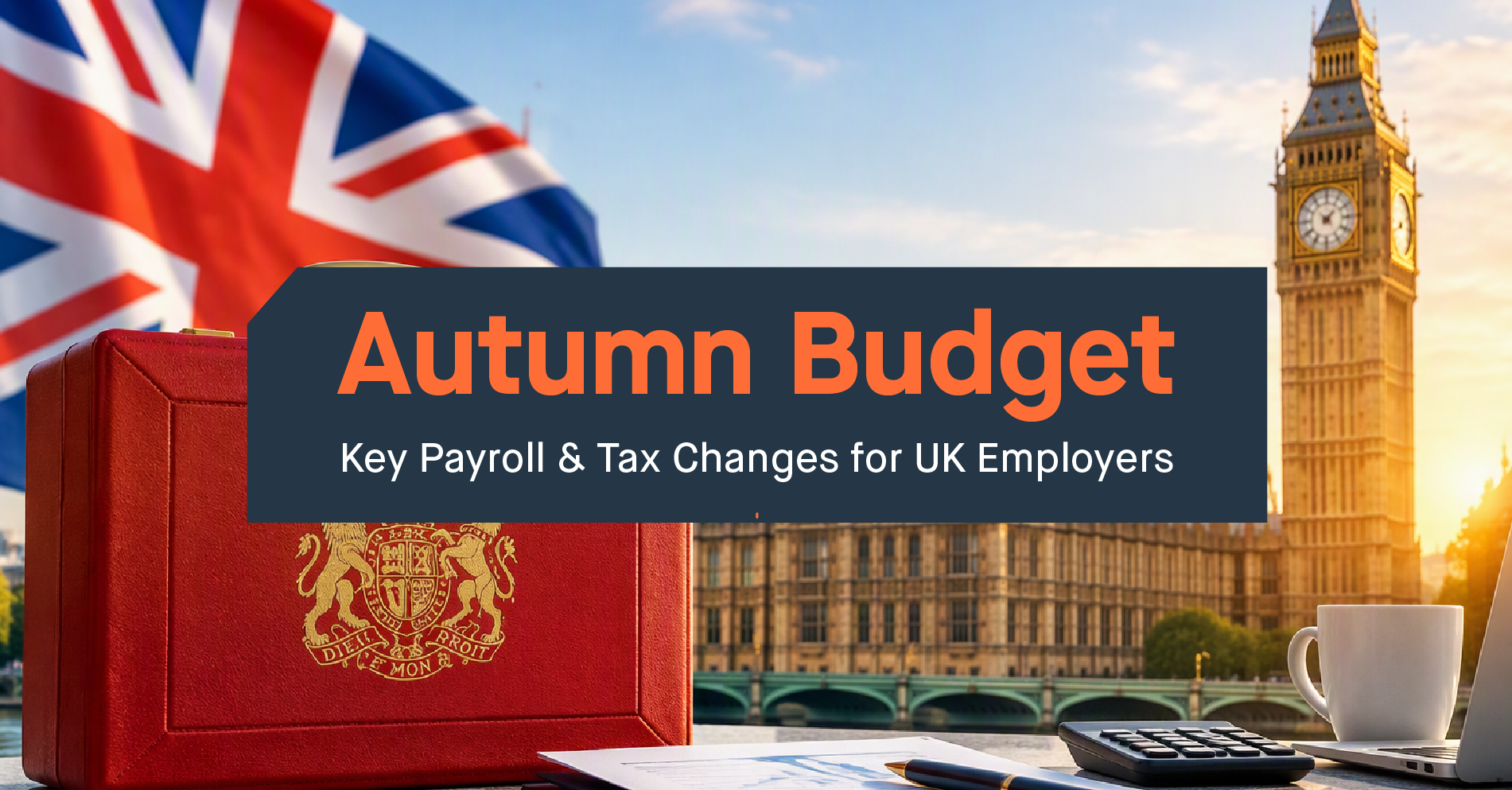

The Autumn Budget 2026 was published on 28 October 2026, with a mixture of measures affecting employers, employees, SMEs and payroll teams. For businesses, some of the most important announcements concern the National Living Wage, mileage allowances, business rates, taxation and future digital reporting.
For payroll and finance teams, the key message is straightforward: April 2027 will bring another round of changes that employers need to prepare for now.
This guide looks at the main Autumn Budget announcements from an employer and payroll perspective, explains when they take effect, and highlights the actions businesses should consider.
Quick Summary: Autumn Budget 2026 for Employers
Among the headline announcements:
- The National Living Wage will rise by 3.9% to £13.21 per hour from 1 April 2027.
- The 18–20 National Minimum Wage rate will rise by 3.9% to £11.27 per hour.
- The Government confirmed no increase to the headline rates of Income Tax, National Insurance contributions or VAT.
- The 55p approved mileage rate for the first 10,000 business miles will become permanent, while the rate above 10,000 miles will increase from 25p to 35p from 6 April 2027.
- The temporary 5p fuel-duty cut will continue until 1 July 2027, while the planned RPI increase will also move to July.
- Selected retail, hospitality and leisure businesses will receive additional business-rates support from April 2027.
- The Government will increase the Income Tax Trading Allowance from £1,000 to £3,000 from 6 April 2027.
- VAT e-invoicing is planned to become mandatory from April 2029, as part of the continued digitalisation of the tax system.
Let’s look at the areas most relevant to employers in more detail.
National Living Wage Will Rise to £13.21
One of the biggest payroll announcements in the Autumn Budget concerns minimum wage rates.
From 1 April 2027, the National Living Wage for workers aged 21 and over will increase by 3.9%, from £12.71 to £13.21 per hour. The Government estimates this will provide a full-time National Living Wage worker with approximately £910 more in annual gross earnings.
The National Minimum Wage for workers aged 18 to 20 will also increase by 3.9%, reaching £11.27 per hour. The Government says the wider minimum-wage increases should benefit around 2.3 million workers.
What Does This Mean for Employers?
The impact extends beyond increasing an employee’s hourly rate.
Finance and payroll teams also need to consider the effect higher wages may have on employer National Insurance contributions, workplace pension contributions, overtime rates and existing internal pay structures.
For example, employees currently earning slightly above the National Living Wage may expect businesses to maintain existing pay differentials.
Therefore, employers with significant numbers of employees at or close to minimum wage should start modelling their 2027–28 employment costs well before April 2027.
No Increase to Headline National Insurance Rates
Businesses entered the Autumn Budget watching closely for further changes to National Insurance.
The Government has confirmed that it will not increase the headline rates of Income Tax, National Insurance contributions or VAT as part of Budget 2026.
For employers, this provides some certainty when forecasting employment costs for the coming year.
However, businesses should still monitor the wider package of 2027–28 payroll thresholds and allowances as HMRC publishes detailed employer guidance.
Major Mileage Allowance Change Confirmed
The Budget also confirmed an important change for employers whose employees use their personal vehicles for business journeys.
Earlier in 2026, the Approved Mileage Allowance Payment rate for cars and vans increased from 45p to 55p per mile for the first 10,000 business miles, retrospectively from 6 April 2026.
The Autumn Budget makes the 55p rate permanent.
More importantly for high-mileage workers, the Government has now confirmed that the rate for business mileage above 10,000 miles will increase from 25p to 35p per mile from 6 April 2027.
The Treasury estimates that the measures will affect around two million employees and one million self-employed people.
Approved car and van mileage rates
| Business mileage | 2026–27 | From April 2027 |
|---|---|---|
| First 10,000 business miles | 55p | 55p |
| Above 10,000 business miles | 25p | 35p |
Employers don’t necessarily have to reimburse employees at the full approved mileage rate. However, payroll and finance teams should review reimbursement policies, expense systems and Mileage Allowance Relief arrangements before April.
Fuel Duty Cut Extended
The Government has also responded to elevated fuel prices.
The Budget cancels the plan to restore the existing 5p fuel-duty reduction from January 2027. Instead, the temporary reduction will continue until 1 July 2027, and the planned RPI increase will also move to that date
The Budget states that diesel exceeded £2 per litre in October 2026 and says the measures aim to provide temporary support to motorists and businesses.
For organisations operating vehicle fleets, logistics businesses or businesses with significant staff travel, this provides some short-term relief when forecasting transport costs.
Business Rates Support for SMEs
The Autumn Budget also introduces targeted business-rates measures, particularly for the retail, hospitality and leisure sectors.
From 1 April 2027, business-rates relief for pubs, social clubs and live music venues will increase by 20 percentage points to 35%.
The Government will also increase the rateable-value thresholds governing Small Business Rate Relief for retail, hospitality and leisure properties. The threshold for 100% relief will rise from £12,000 to £18,000, while the upper threshold for tapered relief will increase from £15,000 to £21,000.
According to the Budget, the change means approximately 70,000 additional retail, hospitality and leisure businesses will pay no business rates.
For other properties in these sectors, the Government plans a two-year real-terms freeze through its transitional support package.
Trading Allowance Increasing to £3,000
Another relevant change for small traders concerns the Income Tax Trading Allowance.
From 6 April 2027, the allowance will rise from £1,000 to £3,000.
This measure primarily affects individuals with smaller amounts of trading income rather than conventional PAYE employees, but it may be relevant to smaller entrepreneurs and people developing businesses alongside employment.
Employee Expenses Claims Will Become Easier
The Budget also contains an administrative change affecting employment expenses.
The Government says it will make it easier for approximately 160,000 employees to claim tax relief on employment expenses by removing the requirement to use Income Tax Self Assessment solely to make these claims.
For employers and payroll professionals, this is worth monitoring because employees frequently approach payroll teams with questions about mileage and allowable work-related expenses.
Digital Tax Reporting Continues to Expand
The UK’s shift towards more digital tax administration will continue.
The Government has confirmed an implementation roadmap for mandatory VAT e-invoicing from April 2029, building on HMRC’s wider Transformation Roadmap and continued rollout of Making Tax Digital.
Although April 2029 may seem distant, the direction of travel is clear.
Businesses should increasingly view payroll, tax, expenses and finance systems as interconnected parts of their digital compliance environment.
For Finance Directors, this places greater importance on system integration, accurate data and reducing manual processes.
Electric Vehicle Mileage Tax from 2028
The Budget also provides further detail on the previously announced Electric Vehicle Excise Duty (eVED).
The new mileage-based charge for electric and plug-in hybrid cars is planned for April 2028. The Government says it will introduce a mileage estimation tool at launch and is exploring a connected vehicle system called “eVED Connect” to reduce manual mileage reporting.
The Government also intends to provide further guidance for fleet operators ahead of implementation.
Businesses operating company-car or EV fleets should therefore monitor future announcements carefully.
A Change Affecting Immigration-Related Employer Costs
The Budget introduces another employer-specific tax change from 28 October 2026.
Where an employer pays an Immigration Skills Charge or Certificate of Sponsorship fee, the Government will legislate so that these payments are not treated as taxable Benefits in Kind.
This will be particularly relevant to businesses sponsoring international employees.
What Should Payroll Teams Do Following the Autumn Budget?
The immediate focus should be April 2027 readiness.
Payroll teams should start planning for the new National Living Wage and National Minimum Wage rates and identify employees whose pay needs updating.
Finance teams should model the wider cost implications, including National Insurance, pension contributions and potential adjustments to pay bands.
Businesses reimbursing employee mileage should also prepare for the new 35p higher-mileage rate and check that expense systems can correctly identify when employees exceed 10,000 qualifying business miles.
Meanwhile, organisations should continue monitoring HMRC publications for the complete 2027–28 payroll rates, thresholds and detailed implementation guidance.
What Does Autumn Budget 2026 Mean for SMEs?
For most SMEs, there isn’t one single Budget measure that transforms payroll overnight.
Instead, Finance Directors and business owners need to consider the cumulative effect.
The National Living Wage increase raises direct employment costs. Mileage changes may increase expense budgets for businesses that reimburse at HMRC rates. Meanwhile, business-rates support may offset some pressure for eligible retail, hospitality and leisure businesses.
At the same time, continued tax digitalisation reinforces the importance of accurate, automated financial and payroll processes.
Consequently, 2027 workforce budgets should consider payroll, pensions, expenses and tax compliance together rather than treating each area separately.
How PayCheck Can Help
Payroll legislation rarely changes in isolation. A minimum wage increase can affect National Insurance and pensions, while changes to mileage and employee benefits can create additional payroll and expenses considerations.
At PayCheck, our Payroll Masters help UK employers stay ahead of these changes through fully managed payroll, HMRC reporting, workplace pension support and payroll compliance expertise.
Speak to PayCheck today to prepare your payroll for the 2027–28 tax year.

Payroll Insights Written By
Vigneswaran Rajagopal | Head of Marketing
Disclaimer: The information in this article is correct to the best of our knowledge at the time of publication and is intended for general guidance only. Tax, payroll and employment rules may change following further HMRC or government guidance. Always check the latest GOV.UK guidance or seek professional advice before taking action.
Official Sources
The information in this article is based primarily on the official Budget 2026, published by HM Treasury on 28 October 2026. [gov.uk]
- Budget 2026 – Full Government Collection: View on GOV.UK
- Budget 2026 – Full HM Treasury Document