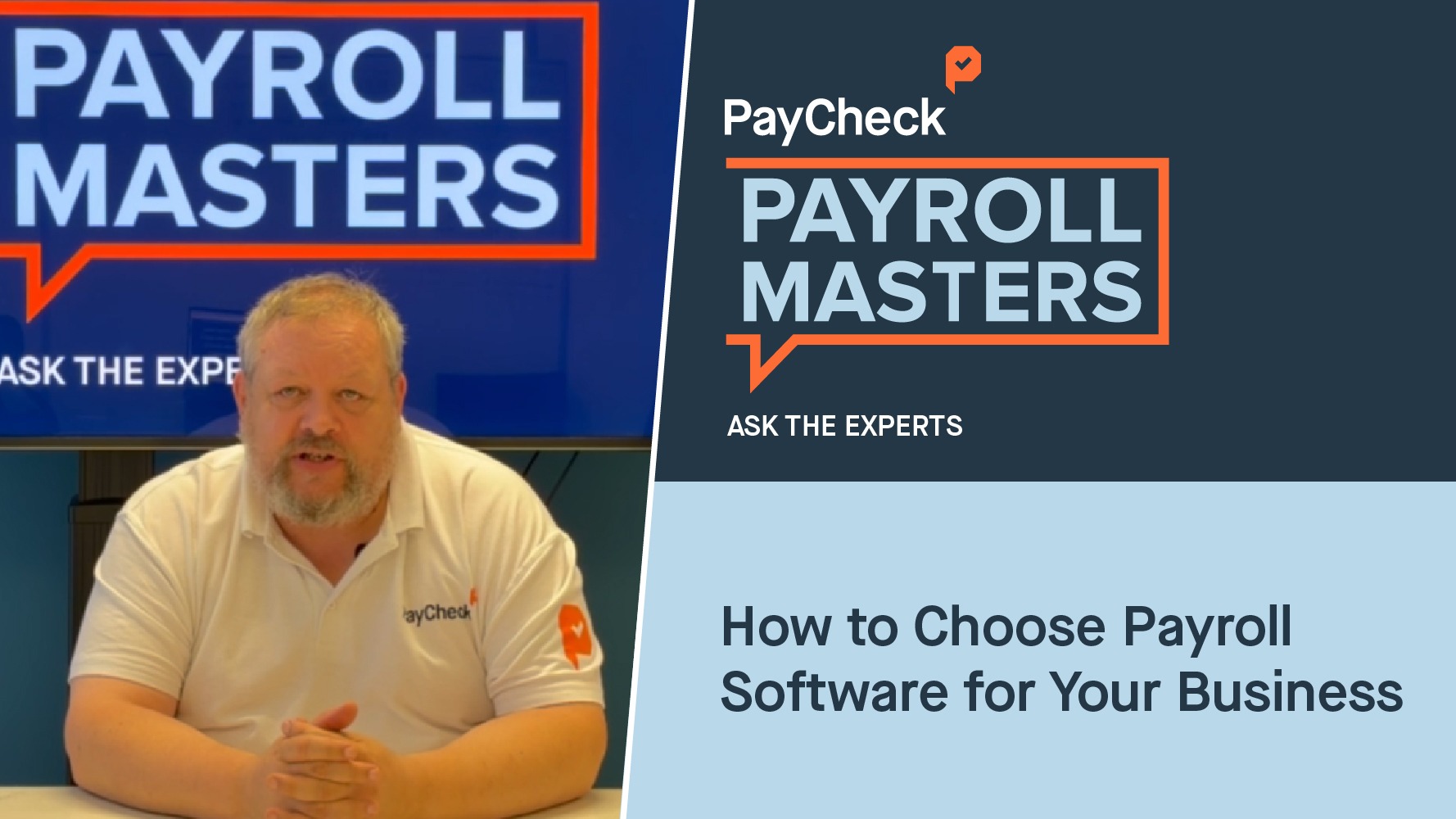
Choosing payroll software is one of the most important decisions a business can make.
Payroll sits at the heart of every organisation. Employees expect to be paid accurately and on time, while employers need confidence that tax, National Insurance, workplace pensions, and HMRC reporting are being handled correctly. The right payroll solution can help streamline processes, improve efficiency, and reduce compliance risk. The wrong choice can create unnecessary administration, reporting issues, and frustration for both employees and management teams.
With dozens of payroll software solutions available in the UK, it can be difficult to know which option is right for your business. Some platforms are designed for small businesses with simple payroll requirements, while others offer enterprise-level functionality for larger and more complex organisations.
Before making a decision, it’s important to understand what separates a good payroll solution from a great one.
Start with HMRC Compliance
The first thing any business should consider is whether the payroll software supports full UK payroll compliance.
Payroll legislation changes regularly, and employers are responsible for ensuring employee pay is calculated correctly and reported accurately to HMRC. A reliable payroll solution should be capable of calculating PAYE, Income Tax, National Insurance Contributions, statutory payments, and other payroll deductions accurately.
It should also support Real Time Information (RTI) submissions, allowing payroll data to be sent directly to HMRC on or before payday.
Choosing software that is recognised and designed for UK payroll requirements helps reduce the risk of reporting errors and ensures the business remains compliant as legislation evolves.
A payroll system that cannot keep pace with compliance requirements could quickly become a liability rather than an asset.
Ease of Use Matters More Than You Think
Payroll can already be complex enough without adding a complicated system into the mix.
Many businesses focus heavily on features during payroll software demonstrations but overlook the importance of usability. A payroll solution should be intuitive, easy to navigate, and straightforward to operate on a regular basis.
If payroll processing requires extensive training or multiple manual workarounds, the software may end up consuming more time than it saves.
A user-friendly platform helps reduce errors, improves productivity, and allows payroll administrators to complete tasks with greater confidence. It also shortens onboarding time for new team members who may need access to the system in the future.
Remember, payroll software is used regularly. Small frustrations experienced every payroll cycle can quickly become significant operational issues.
Don’t Overlook Workplace Pension Management
Workplace pensions are now a core part of payroll administration.
UK employers have legal responsibilities under auto-enrolment legislation and must correctly assess employees, manage contributions, and maintain compliance with pension regulations.
The payroll software you choose should support pension administration efficiently.
This includes assessing employee eligibility, calculating contributions, generating pension reports, and integrating with pension providers where possible.
Poor pension functionality can create additional administration and increase the likelihood of compliance issues. Strong pension management tools, on the other hand, help simplify one of the most important aspects of modern payroll.
Reporting and Payroll Insights Are Increasingly Important
Payroll is often one of the largest costs within a business.
Modern payroll software should provide more than simply payslips and payroll calculations. It should offer valuable reporting capabilities that help business leaders understand payroll costs, identify trends, support budgeting decisions, and improve financial visibility.
Good reporting tools can assist finance teams with reconciliations, management reporting, and forecasting. HR teams may also benefit from workforce insights that support planning and decision-making.
As businesses grow, access to accurate payroll data becomes increasingly valuable, so it is worth considering whether the software provides meaningful reporting rather than basic payroll outputs alone.
Security Should Be a Top Priority
Payroll data is highly sensitive. Employee records contain personal information, salary details, bank account information, National Insurance numbers, and other confidential data that must be protected.
When evaluating payroll software, security should never be treated as an afterthought.
Businesses should look for solutions that offer:
- Secure cloud-based storage
- User permissions and access controls
- Data encryption
- Audit trails
- Backup and recovery procedures
- GDPR-conscious data protection measures
Protecting employee data is not only a compliance requirement but also an important part of maintaining employee trust.
A payroll breach can have serious legal, financial, and reputational consequences.
Consider Whether the Software Can Grow with Your Business
The payroll requirements of a business rarely stay the same.
A company with five employees today may have twenty employees in a few years. New departments may be created. Additional benefits may be introduced. Pension requirements may evolve. Reporting needs may become more sophisticated.
Choosing software that meets your current needs is important, but choosing software that can support future growth is equally critical.
A scalable payroll solution helps avoid the disruption and cost associated with changing providers every few years.
When evaluating options, ask yourself:
Will this software still support our business as we grow?
If the answer is uncertain, it may be worth exploring alternatives.
Integration with Other Business Systems
Payroll does not operate in isolation. Many organisations now use multiple systems for accounting, HR, workforce management, and employee records.
The best payroll solutions integrate effectively with these systems, reducing manual data entry and improving overall efficiency.
Integration can help:
- Reduce duplicate work
- Improve reporting accuracy
- Streamline employee onboarding
- Support finance reconciliation
- Create a more connected employee experience
As businesses increasingly embrace digital transformation, integration capabilities are becoming an important factor in payroll software selection.
Support Can Be Just as Important as Software Features
Even the best payroll software cannot answer every question.
There will be occasions when employers need support, whether that’s understanding a payroll issue, dealing with a legislative change, or resolving an unexpected situation.
Unfortunately, many businesses discover the quality of support only after purchasing the software.
Before committing to a provider, consider:
- Is support UK based?
- How easy is it to contact someone?
- Are there additional support fees?
- What are the response times?
- Can you speak to payroll experts when needed?
Strong support can often make the difference between a positive payroll experience and a frustrating one.
Should You Use Payroll Software or Outsource Payroll?
This is one of the most important questions businesses should ask before purchasing any payroll solution.
Many organisations assume payroll software is the obvious answer. However, software still requires someone within the business to:
- Run payroll
- Monitor compliance
- Manage pension administration
- Keep up with legislation
- Handle employee payroll queries
- Submit reports accurately
As businesses grow, these responsibilities can consume significant amounts of time. This is why many UK organisations ultimately choose a fully managed payroll service rather than managing payroll in-house.
With outsourced payroll, businesses gain access to payroll professionals who manage the process on their behalf, helping reduce administration, improve compliance, and minimise risk.
Rather than simply buying software, they gain expertise and ongoing support.
The Best Payroll Solution Depends on Your Business
There is no universal answer when choosing payroll software. The right solution for a small startup may be very different from the right solution for an established SME with multiple departments and growing compliance requirements.
The most important thing is to look beyond pricing and focus on overall value.
A good payroll solution should:
- Support HMRC compliance
- Be easy to use
- Manage workplace pensions effectively
- Provide meaningful reporting
- Protect employee data
- Scale with your business
- Offer reliable support
Most importantly, it should give you confidence that payroll is being handled correctly every pay period.
Software Isn’t Always the Answer
Choosing payroll software is an important decision, but businesses should also consider whether they actually want to run payroll internally.
For many organisations, managing payroll in-house becomes increasingly time-consuming as the business grows. Legislative changes, pension obligations, employee records, compliance requirements, and payroll queries can all create additional workload.
This is why many businesses choose a specialist payroll provider like PayCheck.
Instead of simply providing software, PayCheck combines payroll technology with expert support, helping businesses reduce administration, maintain compliance, and focus on what they do best.
Choosing payroll software isn’t just about finding the cheapest solution or the system with the longest feature list.
It’s about finding a solution that supports your employees, protects your business, and provides confidence that payroll is being managed accurately and compliantly.
Whether that means investing in payroll software or partnering with a trusted payroll provider, the right decision can save time, reduce risk, and support your business for years to come.
The best payroll solution is the one that saves time, reduces risk, and grows alongside your business.

Insights from Payroll Master
Mark Sapsford | Sr.Business Development Manager