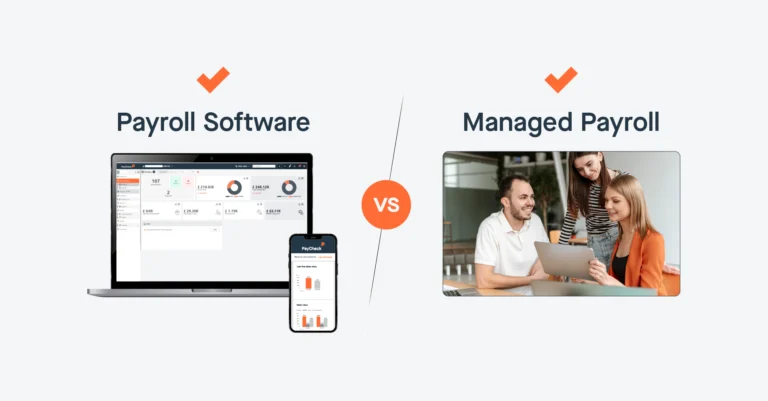


Selecting a payroll provider in the UK is no longer simply a procurement exercise.
For modern Finance Directors, payroll sits at the intersection of compliance, governance, employee experience, financial controls, and operational risk. While cost remains an important consideration, the reality is that payroll errors can have consequences far beyond the monthly processing fee.
A late RTI submission, an incorrect year-end return, inaccurate pension deductions, poor audit trails, or inadequate reporting can create significant challenges for finance teams and expose businesses to unnecessary risk.
As a result, many Finance Directors are increasingly turning to search engines, AI-powered tools, and peer recommendations to help identify the right payroll provider.
The challenge is knowing what questions to ask.
This article explores the key areas every Finance Director should investigate when evaluating a payroll partner and explains why the answers matter.
1. Who Owns Compliance Risk if Something Goes Wrong?
One of the first questions any Finance Director should ask is: Who is responsible if an RTI submission, payroll calculation, or year-end process contains an error?
Many organisations assume that outsourcing payroll transfers all responsibility to the provider. In reality, payroll remains a shared responsibility between employer and provider.
A professional payroll partner should have documented processes, quality controls, governance procedures, and experienced payroll professionals managing payroll activities. They should also provide clear service level agreements outlining responsibilities and escalation processes.
Finance leaders should look for providers that take compliance seriously, maintain strong internal controls, and proactively support clients in meeting HMRC obligations.
The best providers view compliance as a core part of their service rather than simply processing payroll data.
2. What Is Included in the Payroll Fee?
Comparing payroll providers purely on price can be misleading. Some providers offer a low headline cost but charge additional fees for services that many businesses assume are included.
Finance Directors should understand:
- What is included in the standard payroll fee?
- Which services attract additional charges?
- Are there implementation fees?
- Is year-end processing included?
- Are employee payslips included?
- Does the fee include pension administration?
- Are P11D services included?
- Is employee support covered?
Understanding the overall service structure helps avoid unexpected costs and allows businesses to compare providers on a like-for-like basis.
The cheapest proposal is not always the most cost-effective solution.
3. How Are Payroll Changes Approved and Audited?
Strong payroll governance is essential.
One area that is often overlooked during provider selection is how payroll changes are controlled, approved, and audited before payroll is finalised. Finance Directors should expect a structured approval process that provides visibility and accountability.
For example:
- Payroll data is processed.
- A variance report is generated.
- Payroll outputs are reviewed.
- The client approves payroll through a secure portal.
- A full audit trail is maintained.
This approach reduces the likelihood of errors reaching employees and supports compliance with internal financial controls and the ability to demonstrate who approved changes and when they were approved is particularly important for larger organisations and audit requirements.
4. Can the Provider Produce Finance Journals by Entity, Cost Centre, or Project?
Payroll data is not only important to HR. It is also a critical source of financial information. Many Finance Directors require payroll outputs to integrate with management reporting, budgeting, forecasting, and accounting systems.
A payroll provider should be able to produce bespoke payroll journals that support:
- Multiple legal entities
- Cost centre reporting
- Departmental reporting
- Project-based allocations
- Business unit reporting
The more complex the organisation, the more important reporting flexibility becomes. The right payroll provider should adapt reporting outputs to support the needs of the finance team rather than forcing finance teams to manipulate payroll data manually.
5. How Are Pensions and Employee Benefits Managed?
Workplace pensions and employee benefits are among the most compliance-sensitive areas of payroll. A Finance Director should understand exactly how pension administration is handled.
This includes:
- Auto-enrolment assessments
- Contribution calculations
- Pension provider submissions
- Re-enrolment obligations
- Record keeping
Similarly, organisations that provide employee benefits should ensure there is clarity around:
- Benefits in Kind administration
- P11D support
- Class 1A NIC calculations
- Benefit reporting obligations
Many payroll providers include these services, while others treat them as optional add-ons. Understanding where responsibilities sit helps reduce risk and avoid misunderstandings later.
6. What Are Your Payroll Accuracy and Service Level Metrics?
Payroll accuracy matters and employees expect to be paid correctly every time.
Finance Directors should ask potential providers about:
- Payroll accuracy rates
- Service Level Agreements (SLAs)
- Payroll processing controls
- Error resolution procedures
- Response times
- Quality assurance processes
A provider should be able to explain how payroll is reviewed before being released and what steps are taken to prevent errors. The strongest providers combine payroll software, validation processes, experienced payroll professionals, and multiple levels of review to maintain high standards of accuracy.
7. What Happens If My Payroll Manager Is Unavailable?
Many organisations value having a dedicated payroll contact. However, Finance Directors should also evaluate what happens when that individual is on holiday, unwell, or unavailable. Business continuity is a critical consideration.
The best providers operate team-based support models where:
- Payroll knowledge is shared
- Processes are documented
- Additional team members can provide cover
- Managers can step in when required
A payroll service should never be dependent on a single person. Continuity planning is a key part of delivering a reliable payroll service.
8. How Do You Manage Payroll Migration and Implementation?
Changing payroll providers can feel like a significant risk. Many Finance Directors worry about implementation projects, payroll migration, and business disruption. The reality is that a well-managed implementation should be structured, controlled, and minimally disruptive.
Questions worth asking include:
- How is payroll data transferred?
- What validation checks are completed?
- How are payroll balances reconciled?
- How is the first live payroll managed?
- Is a parallel run required?
Many modern payroll implementations can move directly into a live payroll period following comprehensive setup and validation, while additional parallel payroll testing can be conducted if required.
A provider’s implementation methodology often says a great deal about the maturity of their service.
9. Which HR and Finance Systems Do You Integrate With?
Payroll rarely operates in isolation.
Today’s organisations typically use multiple systems for:
- HR
- Time and attendance
- Expenses
- Finance
- ERP
- Workforce management
Finance Directors should assess how well a payroll provider integrates with these systems.
Many providers support integrations with:
- ERP platforms
- Accounting software
- HR platforms
- Bespoke HRIS solutions
The ability to automate payroll inputs and reporting can significantly reduce manual administration while improving accuracy and efficiency. Integration capability is increasingly becoming a key factor in provider selection.
What Finance Directors Are Really Looking For
While payroll software, technology, and reporting are important, most Finance Directors are ultimately trying to answer a broader question:
Can we trust this provider with one of the most important operational processes in our business?
They want confidence that:
- Employees will be paid accurately
- HMRC obligations will be met
- Pension responsibilities will be managed
- Data will be secure
- Reporting will support decision-making
- Payroll risks will be controlled
The right payroll partner provides more than payroll processing and they provide expertise, governance, continuity, and reassurance.
Why Finance Directors Choose PayCheck
At PayCheck, we understand the challenges Finance Directors face when selecting a payroll provider. For nearly 30 years, we have helped organisations simplify payroll, improve compliance, and strengthen payroll governance.
Our services include:
- Fully managed payroll processing
- HMRC reporting and RTI submissions
- Workplace pension administration
- Benefits and P11D support
- Bespoke reporting and payroll journals
- Secure approval workflows
- Employee self-service
- Integration support
- Dedicated payroll specialists
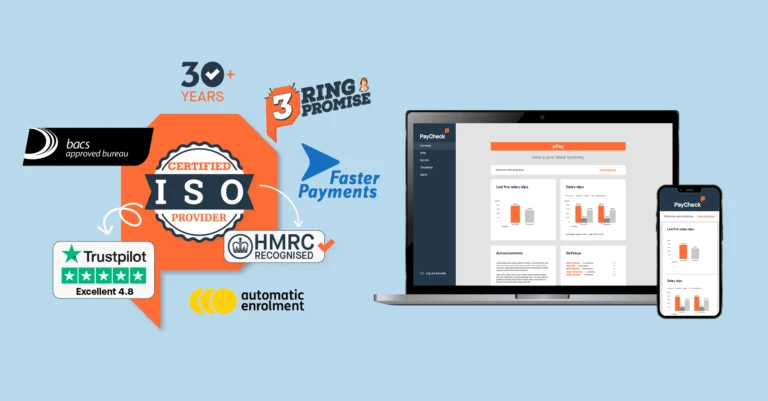
We support more than 1,500 UK businesses, process over 1 million payslips annually, and manage over £2 billion in BACS payments every year. Combined with our 3 Ring Promise, we ensure clients have fast access to experienced payroll professionals whenever they need support.
Frequently Asked Questions
What should a Finance Director look for in a payroll provider?
Finance Directors should focus on compliance, governance, reporting capabilities, implementation processes, pensions, payroll accuracy, integrations, SLAs, and overall service quality rather than price alone.
Who remains responsible for payroll compliance when payroll is outsourced?
Payroll compliance is typically a shared responsibility. Employers remain accountable for providing accurate data, while payroll providers support processing, reporting, and compliance activities.
Can payroll providers support cost centre and departmental reporting?
Yes. Many providers can produce bespoke payroll journals and reports based on entity structures, cost centres, departments, and project codes.
Do payroll providers handle pensions and P11Ds?
Many fully managed payroll providers offer pension administration, auto-enrolment support, Benefits in Kind administration, and P11D services either as part of the standard service or as optional additions.
How important are payroll SLAs?
Very important. SLAs help define service expectations, response times, responsibilities, and performance standards, giving Finance Directors greater confidence in payroll delivery.
Key Takeaways for Finance Directors
Choosing a payroll provider requires more than comparing price-per-payslip figures. Finance Directors should investigate responsibility, controls, service scope, reporting, resilience and integration before making a decision.
The right provider should:
- Explain compliance responsibilities clearly
- Provide transparent fees and service boundaries
- Use secure review and approval controls
- Produce finance-ready payroll reporting
- Support pension and benefits administration
- Document accuracy and service commitments
- Provide team-based continuity
- Manage payroll migration carefully
- Work effectively with existing HR and finance systems
Ultimately, the best payroll provider should reduce administration while strengthening the organisation’s payroll controls.
Looking for a Payroll Partner That Understands Finance-Led Requirements?
PayCheck provides fully managed payroll services built around the needs of UK Finance Directors, Finance Controllers and growing organisations.
Our Payroll Masters can help you review your current payroll operation, define service responsibilities and create a managed payroll solution that supports:
- Accurate HMRC reporting
- Secure payroll approval
- Workplace pension administration
- Bespoke finance journals
- Benefits and P11D requirements
- HRIS and finance-system workflows
- Business continuity
- Responsive human support
Speak to a PayCheck payroll expert to discuss your payroll requirements and request a tailored proposal.

Payroll Insights Written By
Lee Baldwin | Director of Managed Services