

What Is an Employer of Record (EOR)?
Hiring employees in the UK can be complex, particularly for businesses expanding into new markets, employing remote workers, or lacking an established legal entity.
This is where an Employer of Record (EOR) can help.
An Employer of Record is a third-party organisation that legally employs workers on behalf of another company. The EOR becomes the official employer for legal, payroll, tax, and compliance purposes, while the client company retains day-to-day responsibility for managing the employee’s work and performance.
In simple terms, an EOR gives your business access to UK-based employees without requiring you to set up a UK legal entity first. The employee works under your day-to-day direction, while the EOR becomes the legal employer and takes responsibility for payroll, tax, pensions, employment contracts and compliance administration.
This allows companies to hire workers in the UK quickly and compliantly without establishing their own UK legal entity.
However, EOR is not always the best solution for every employer. If your business already has a UK entity, a specialist payroll outsourcing partner may be a more practical and cost-effective way to reduce compliance risk, improve payroll accuracy and support employees while keeping the employment relationship directly with your organisation.
Why Are EOR Services Becoming More Popular?
The workplace has changed dramatically over the past decade. Businesses are increasingly hiring remote employees, expanding internationally, building distributed teams and recruiting specialist talent regardless of location. For many organisations, entering a new market no longer means committing immediately to a local office, permanent entity or full internal HR infrastructure.
For many organisations, establishing a UK company solely to employ one or two workers is expensive and time-consuming. An EOR removes this barrier.
How Does an EOR Work?
The relationship typically involves three parties:
The Client Company
This is the business requiring the employee. The client company selects the candidate, agrees the role, assigns work, sets objectives and manages the employee’s day-to-day performance. This means the employee remains operationally part of the client’s team, even though the legal employment relationship sits with the EOR.
The Employee
The employee performs work for the client company but is legally employed by the EOR.
The Employer of Record
The EOR takes responsibility for the formal employment infrastructure, including employment contracts, payroll processing, PAYE and National Insurance, workplace pensions, statutory compliance, onboarding, HR administration and compliant termination procedures where required.
What Responsibilities Does an EOR Handle?
One of the biggest advantages of an EOR is the transfer of administrative and compliance responsibilities.
An EOR typically manages the core obligations that sit around employment, including monthly payroll, PAYE deductions, National Insurance contributions, RTI submissions, payslips, pension auto-enrolment, statutory payments and year-end reporting.
Employment Contracts
The EOR prepares compliant employment contracts that align with UK legislation.
Employee Benefits
Many EOR providers assist with:
- Private medical insurance
- Life assurance
- Holiday administration
- Employee benefits packages
Statutory Payments
The EOR manages:
- Statutory Sick Pay (SSP)
- Statutory Maternity Pay (SMP)
- Statutory Paternity Pay (SPP)
- Other family-related payments
When Should Businesses Use an Employer of Record?
Expanding Into the UK
A US, European, or international company may want to hire UK-based employees without establishing a UK company. An EOR allows them to do this quickly.
Hiring Remote Employees
Many businesses now hire employees wherever the best talent is located. An EOR simplifies the employment process.
Testing a New Market
Businesses often want to explore opportunities before committing to a permanent UK entity. An EOR allows employers to hire staff and assess market potential with reduced risk.
Fast Hiring Requirements
Setting up a legal entity can take time. An EOR allows businesses to employ staff significantly faster.
Benefits of Using an EOR
Faster Market Entry
One of the biggest advantages is speed. Businesses can often begin employing workers in the UK within weeks rather than months.
Reduced Compliance Risk
UK employment regulations are complex. An EOR helps reduce that exposure by managing HMRC requirements, PAYE reporting, employment contracts, pension obligations and statutory employee rights on behalf of the client company. This significantly reduces risk.
Lower Administrative Burden
HR, payroll, and finance teams spend less time managing employment administration.
Scalability
EOR arrangements make it easier to:
- Hire new staff
- Expand into new markets
- Build international teams
without increasing internal administration.
Focus on Business Growth
Rather than spending time on compliance and payroll administration, leadership teams can focus on:
- Sales
- Customer acquisition
- Business development
- Growth initiatives
Potential Disadvantages of EOR Services
While EORs offer many advantages, they are not the perfect solution for every organisation.
Additional Cost
Businesses pay a service fee for the EOR’s support and compliance management.
Less Direct Employment Relationship
Although employees work for the client business, the EOR remains the legal employer.
Not Always Suitable for Large Established Operations
For businesses with significant employee numbers in the UK, establishing a UK entity may become more cost-effective over time.
EOR vs Payroll Outsourcing
These services are sometimes confused, but they are very different.
Payroll Outsourcing
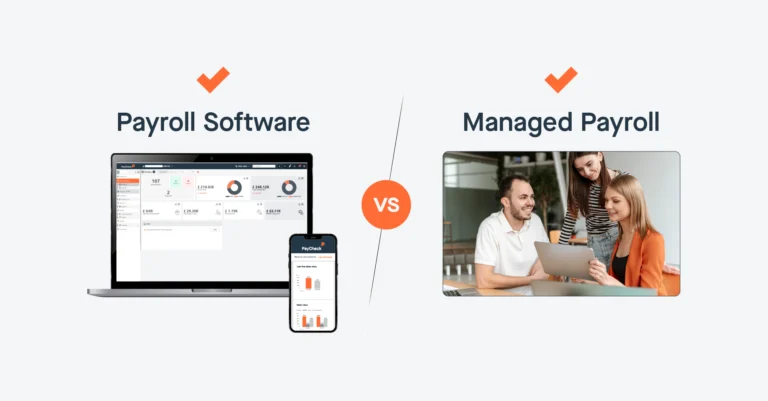
With payroll outsourcing, your business remains the legal employer and retains responsibility for the employment relationship, while the payroll provider manages the specialist payroll process, calculations, submissions, payslips and related compliance administration.
Employer of Record
With an EOR, the third-party provider becomes the legal employer, assumes employment responsibilities and provides the local employment infrastructure, while the client company continues to manage day-to-day work activity and performance.
As a rule of thumb, EOR is usually most relevant for businesses that do not yet have a UK entity or want to test a market quickly. Payroll outsourcing is usually more suitable for businesses that already employ people in the UK and want expert support to run payroll accurately, meet HMRC and pension obligations, and reduce internal administrative pressure.
EOR vs Professional Employer Organisation (PEO)
PEO: A Professional Employer Organisation typically operates under a co-employment model. Businesses usually need a local legal entity.
EOR: An Employer of Record does not require the client to have a legal entity in the country where employees are located. This makes EORs particularly attractive for international expansion.
How Much Do EOR Services Cost?
Pricing varies considerably depending on:
- Number of employees
- Country locations
- Benefits packages
- Employment complexity
- Service levels
EOR providers typically charge:
- A monthly fee per employee
- A percentage of payroll
- Custom enterprise pricing
Businesses should review:
- Payroll administration
- Pension management
- Benefits administration
- HR support
- Compliance services
when comparing providers.
What Should Businesses Look for in an EOR Provider?
When evaluating EOR providers, consider:
Compliance Expertise
The provider should have extensive UK employment law knowledge.
Payroll Capabilities
Look for:
- HMRC compliance
- PAYE reporting
- Pension administration
Employee Experience
Employees should receive:
- Professional onboarding
- Timely payroll
- Access to support
Scalability
Can the provider support future growth?
Service Quality
Responsiveness is critical. When employment issues arise, businesses need expert support quickly.
How PayCheck Supports UK Employment and Payroll Compliance
Although many businesses initially explore Employer of Record services, the more important question is whether they need a legal employer in the UK or simply a stronger payroll and compliance partner. For organisations with a UK entity already in place, outsourcing payroll can often deliver the practical benefits they are looking for without changing who legally employs their people.
PayCheck supports UK employers with accurate payroll processing, HMRC compliance, pension administration, employee onboarding support, benefits administration support and dedicated payroll expertise. This helps businesses reduce internal workload, improve confidence in payroll accuracy and give employees more reliable payroll experience.
With nearly 30 years of payroll experience, PayCheck helps businesses remove payroll complexity and focus on growth.
PayCheck’s human-led service also means employers receive expert support when they need it, including our 3 Ring Promise, designed to ensure payroll support never keeps clients waiting.

Insights from Payroll Master
Mark Sapsford | Sr.Business Development Manager
Frequently Asked Questions
What is an Employer of Record?
An Employer of Record (EOR) is a third-party organisation that legally employs workers on behalf of another company while managing payroll, tax, and employment compliance.
Is an EOR legal in the UK?
Yes. EOR services operate legally and are commonly used by international businesses hiring UK employees.
Do I need a UK company to hire UK employees through an EOR?
No. One of the main advantages of an EOR is that it allows businesses to hire employees without establishing a UK legal entity.
What is the difference between payroll outsourcing and an EOR?
With payroll outsourcing, your business remains the legal employer. With an EOR, the EOR becomes the legal employer and assumes employment responsibilities.
When should businesses use an EOR?
EORs are most commonly used for:
- International expansion
- Hiring remote workers
- Entering new markets
- Testing business opportunities
- Employing workers without a local legal entity