

For many UK SMEs, payroll starts as a simple administrative task. For a small team it’s a straight forward monthly payroll run, and a payroll software package often seem sufficient to keep everything running smoothly.
However, as businesses grow, payroll becomes significantly more complex. New employees join, pension obligations increase, statutory payments become more frequent, Benefits in Kind must be reported correctly, and HMRC reporting requirements continue to evolve.
At the same time, HMRC expects employers to submit accurate payroll information in real time and maintain detailed employee records. Even minor mistakes can result in penalties, interest charges, employee complaints, and unnecessary administration. This is one of the key reasons many businesses are turning to outsourced payroll services.
While outsourcing payroll is often associated with saving time, one of the biggest advantages is actually reducing HMRC compliance risk. By working with payroll specialists, SMEs can improve accuracy, strengthen payroll management processes, and gain confidence that critical payroll obligations are being handled correctly.
Why HMRC Compliance is a Growing Concern for SMEs
Payroll compliance has become increasingly challenging for small and medium-sized businesses.
Employers must now manage:
- PAYE calculations
- National Insurance contributions
- Real Time Information (RTI) submissions
- Workplace pension administration
- Statutory Sick Pay (SSP)
- Statutory Maternity Pay (SMP)
- Employee records
- Year-end reporting
- Benefits in Kind and P11D requirements
Each area carries its own rules, deadlines, and reporting obligations. Many SMEs do not have dedicated payroll departments. Instead, payroll responsibilities are often shared between finance teams, office managers, HR professionals, accountants, or directors who already have multiple responsibilities. As payroll complexity grows, so does the risk of error.
The Hidden Costs of Payroll Mistakes
Most businesses immediately think about HMRC penalties when discussing payroll risk. However, the true cost of payroll mistakes often extends far beyond any fine.
A payroll error can result in:
- Employees being paid incorrectly
- Missed HMRC deadlines
- Additional administrative work
- Pension contribution issues
- Time-consuming investigations
- Loss of employee confidence
For Finance Directors and Operations Leaders, payroll problems also create distractions from strategic priorities such as budgeting, forecasting, resource planning, and business growth. The cost of correcting payroll errors often exceeds the original mistake.
Why Payroll Software Alone Doesn’t Eliminate Risk
Modern payroll software is powerful and continues to improve through automation and integration. Many employers assume that implementing payroll software automatically means their payroll is compliant. Unfortunately, compliance requires more than technology.
Payroll software can calculate figures and generate reports, but it still relies on:
- Accurate employee data
- Correct payroll settings
- Up-to-date legislative knowledge
- Consistent internal processes
- Proper review procedures
The majority of payroll mistakes are caused by incorrect inputs, incomplete information, or missed processes rather than software failures. Even the best technology cannot replace payroll expertise.
How Outsourced Payroll Services Reduce HMRC Risk
One of the biggest benefits of outsourced payroll services is access to specialist knowledge.
Professional payroll providers process payroll every day and stay up to date with changing legislation, HMRC requirements, National Insurance thresholds, pension regulations, and statutory payment rules. This helps ensure that payroll calculations and reporting remain accurate as regulations evolve.
Instead of relying on one internal employee to monitor changing legislation, businesses gain access to payroll professionals whose primary responsibility is payroll compliance. This significantly reduces the risk of avoidable mistakes.
Improved Accuracy Through Dedicated Payroll Management
Accurate payroll management remains one of the strongest defences against HMRC penalties.
Outsourced payroll providers typically operate structured processes that include:
- Payroll data validation
- Payroll processing checks
- Reporting reviews
- Compliance monitoring
- Approval workflows
These controls help reduce common errors such as:
- Incorrect tax codes
- National Insurance mistakes
- Missing employee information
- Incorrect pension deductions
- Payroll calculation errors
Because providers manage payroll across multiple clients, they often have established procedures that many SMEs would struggle to replicate internally.
Better RTI Compliance
Since the introduction of Real Time Information (RTI), payroll reporting has become more visible to HMRC than ever before. Employers are required to submit payroll data when or before employees are paid. Late or inaccurate RTI submissions remain one of the most common compliance risks faced by businesses.
Outsourced payroll services help reduce this risk by ensuring:
- Submission deadlines are monitored
- Payroll schedules are maintained
- Reporting is completed correctly
- Employee data is validated before submission
This creates a more consistent and reliable reporting process.
Keeping Up With Payroll Legislation
Payroll legislation rarely stands still.
Every year employers face updates to:
- Tax rates and thresholds
- National Insurance contributions
- National Minimum Wage rates
- Pension regulations
- Employment legislation
- Statutory payment rules
For SMEs, staying current can be challenging.
Payroll providers continuously monitor legislative developments and update processes accordingly, helping employers maintain compliance without investing significant internal time in payroll research and training. This is particularly valuable for businesses that do not have a dedicated payroll professional.
Reduced Pension Compliance Risk
Workplace pensions remain one of the most common areas where payroll mistakes occur.
Employers are required to:
- Assess employee eligibility
- Enrol eligible workers
- Calculate contributions accurately
- Submit pension data on time
Even small errors can create additional administration and regulatory concerns.
Many outsourced payroll services include pension administration support, helping businesses reduce the risk of missed enrolments, inaccurate contributions, and late submissions.
For SMEs, this can significantly improve confidence in the payroll process.
Business Continuity and Reduced Dependence on Key Employees
A common challenge for SMEs is that payroll knowledge often sits with one person.
This may be:
- A Payroll Administrator
- A Finance Manager
- A Bookkeeper
- A director
- An external accountant
When those individual leaves, retires, or becomes unavailable, businesses can suddenly find themselves exposed. Outsourced payroll services help address this risk by providing access to an entire payroll team rather than a single employee. This creates greater resilience and ensures payroll continues without disruption, even during periods of change.
More Time for Strategic Business Activities
While compliance is critical, payroll outsourcing also creates operational benefits. By removing much of the administrative burden associated with payroll processing, SMEs can free up valuable internal resources.
Finance teams can spend more time on:
- Financial planning
- Cash-flow management
- Budgeting
- Reporting
- Business performance analysis
HR teams can focus on recruitment, retention, and employee engagement. This allows businesses to redirect energy away from administration and towards growth.
Why More SMEs Are Choosing Outsourced Payroll Services
Businesses typically begin exploring outsourced payroll services when:
- Payroll becomes too time-consuming
- Compliance concerns increase
- Employee numbers grow
- Payroll staff leave or retire
- HMRC requirements become more complex
For many SMEs, outsourcing is no longer simply about reducing workload. It’s about improving accuracy, strengthening compliance, and creating a more resilient payroll operation. While payroll software remains an important tool, technology alone cannot remove compliance risk.
A fully managed outsourced payroll services provide access to experienced professionals, stronger payroll management processes, improved reporting accuracy, and ongoing legislative oversight. The result is lower HMRC risk, greater confidence, and more time for your business to focus on growth.
If your organisation wants to reduce payroll risk while improving operational efficiency, outsourced payroll may be one of the smartest investments you can make.
How PayCheck Helps UK SMEs Reduce HMRC Risk
At PayCheck, we help UK businesses reduce payroll risk through a fully managed payroll service backed by experienced payroll professionals.
Our services include:
- Payroll processing
- RTI submissions
- Workplace pension administration
- Employee self-service options
- P11D and Benefits in Kind support
- HMRC compliance assistance
- Starter and leaver management
- Dedicated payroll experts
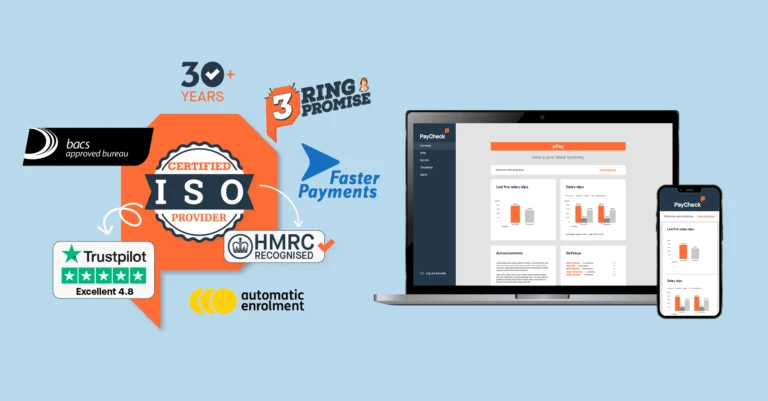
With nearly 30 years of experience supporting UK businesses, we combine modern payroll technology with a human-first approach and our well-known 3 Ring Promise, ensuring clients can quickly speak to a real payroll professional when support is needed.

Insights from Payroll Master
Lee Baldwin | Director of Managed Services
Frequently Asked Questions
What are outsourced payroll services?
Outsourced payroll services involve partnering with a specialist payroll provider to manage payroll processing, HMRC reporting, pension administration, payslips, statutory payments, and other payroll-related activities on behalf of your business. The provider handles the day-to-day payroll administration while helping ensure compliance with current UK payroll legislation.
How do outsourced payroll services reduce HMRC compliance risk?
Outsourced payroll providers specialise in payroll legislation, HMRC reporting requirements, and payroll best practices. They help ensure RTI submissions, PAYE deductions, National Insurance calculations, pension contributions, and statutory payments are processed accurately and submitted on time, reducing the risk of penalties and compliance issues.
Can outsourced payroll help prevent HMRC penalties?
Yes. While no provider can guarantee that penalties will never occur, outsourced payroll services can significantly reduce the risk of mistakes that commonly lead to penalties, such as late RTI submissions, incorrect employee records, payroll calculation errors, and missed reporting deadlines.
Is outsourced payroll suitable for small businesses?
Absolutely. Many small businesses outsource payroll because they do not have a dedicated payroll specialist. Outsourcing provides access to payroll expertise without the cost of hiring and training an in-house payroll professional.
How much do outsourced payroll services cost in the UK?
UK payroll pricing varies depending on factors such as employee numbers, pay frequency, pension requirements, Benefits in Kind, and service levels. Most providers offer tailored pricing based on the complexity and size of your payroll.
What payroll tasks can be outsourced?
A fully managed payroll service provider like PayCheck may help with:
- Payroll processing
- RTI submissions to HMRC
- Workplace pension administration
- Payslip production
- P45 and P60 generation
- Statutory payment calculations
- Starter and leaver management
- P11D and Benefits in Kind support
- Payroll reporting
- Employee payroll support
Is payroll software enough to keep my business compliant?
Payroll software is an excellent tool, but compliance still depends on accurate data, correct payroll settings, and up-to-date payroll knowledge. Many payroll errors occur because of incorrect information, missed updates, or process failures rather than software issues.
What happens if our payroll administrator leaves?
This is one of the most common reasons businesses choose outsourced payroll services. An outsourced provider reduces reliance on a single individual and provides continuity through a dedicated team of payroll professionals, helping ensure payroll continues without disruption.
Can outsourced payroll manage workplace pensions?
Yes. Most managed payroll providers can assess employee eligibility, calculate pension contributions, manage auto-enrolment duties, and submit contribution files to pension providers, helping employers meet their workplace pension obligations.
Does outsourcing payroll mean losing control?
No. Businesses remain in control of payroll approval and employee decisions. A payroll provider processes payroll based on information supplied by the employer and typically provides reports for review and approval before payroll is finalised.
How does outsourced payroll improve payroll management?
Outsourcing introduces structured payroll processes, additional checks, reporting controls, legislative oversight, and access to payroll expertise. This often improves payroll accuracy, consistency, and overall efficiency while reducing administrative burden.
What types of businesses benefit most from outsourced payroll?
Outsourced payroll is particularly valuable for:
- SMEs with limited payroll resources
- Growing businesses
- Employers with complex payroll requirements
- Businesses concerned about HMRC compliance
- Companies whose payroll specialist is retiring or leaving
- Organisations wanting to free up finance and HR teams for strategic work