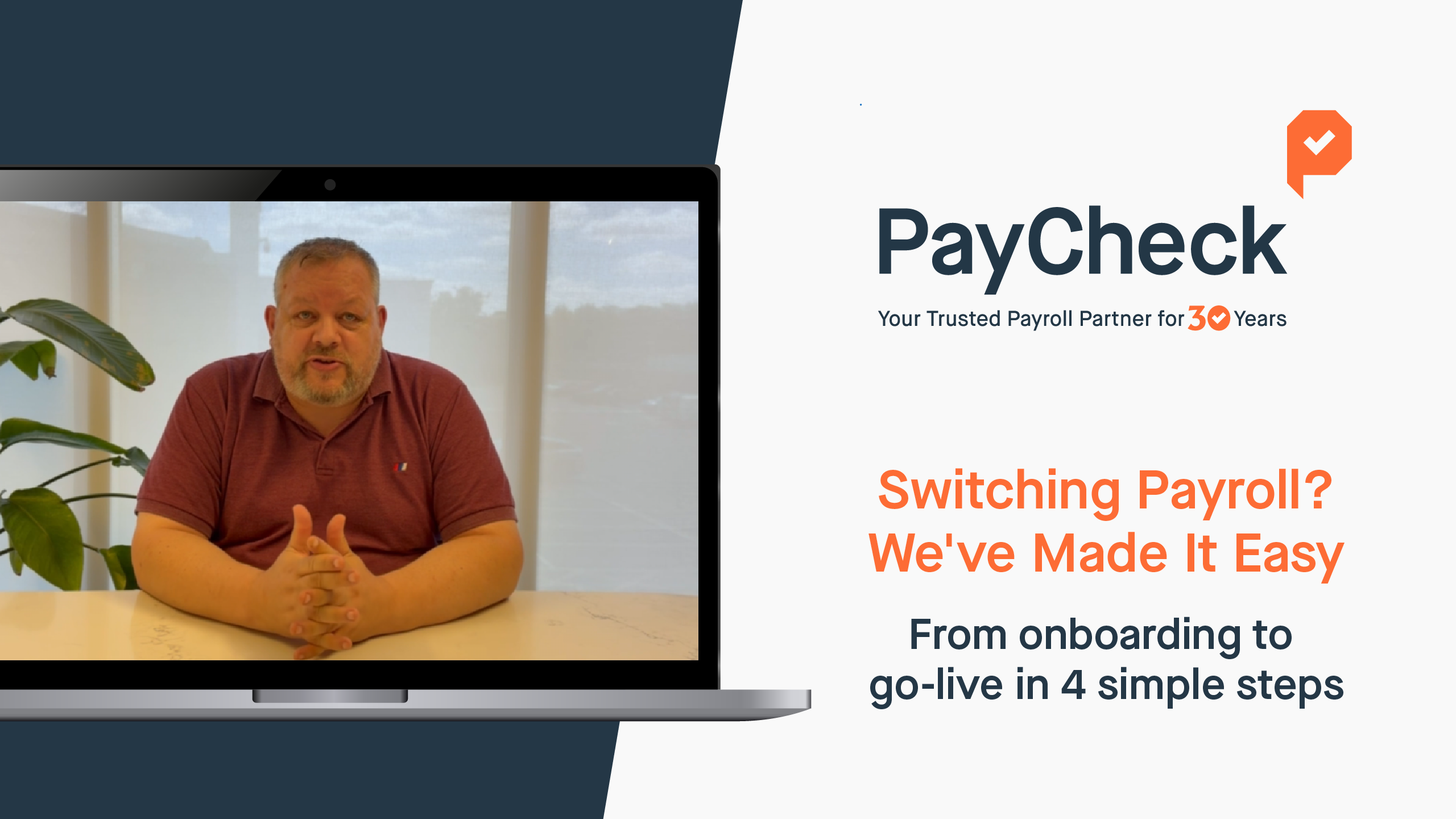
A Guide to Switching Payroll Companies
For many UK businesses, payroll is managed by a trusted individual who knows every detail of the organisation.
It may be:
- An experienced Payroll Manager
- A long-serving Payroll Administrator
- A Finance Manager handling payroll
- An external accountant
- A bookkeeper who has managed payroll for years
Over time, these individuals become the custodians of vital payroll knowledge, processes, deadlines, employee records, pension administration, HMRC reporting requirements, and company-specific payroll practices.
But what happens when that person retires, resigns, or moves on?
This is a common reasons businesses contact PayCheck.
Often, the first conversation starts with:
“Our payroll manager is retiring after 20 years.”
Or:
“Our accountant is no longer offering payroll services.”
The reality is that losing payroll knowledge can create significant operational and compliance risks if not managed properly.
Why Payroll Knowledge Is Often Concentrated in One Person
Many businesses don’t realise how much payroll knowledge sits with one individual until they leave.
That person may be responsible for:
✅ Payroll processing
✅ HMRC submissions
✅ Workplace pensions
✅ Benefits in Kind
✅ P11Ds
✅ Holiday pay calculations
✅ Employee payroll queries
✅ Year-end submissions
✅ Payroll journals
✅ Liaison with pension providers
Over the years, they also develop detailed knowledge of:
- Employee arrangements
- Company policies
- Historical payroll decisions
- Payroll exceptions
- Internal approval processes
When they leave, that knowledge can disappear overnight.
The Risks of Keeping Payroll In-House After a Departure
Many businesses initially consider redistributing payroll responsibilities internally.
However, this can create several challenges.
Compliance Risks
Payroll legislation changes regularly.
Remaining compliant requires knowledge of:
- HMRC regulations
- RTI reporting
- National Minimum Wage rules
- Pension auto-enrolment
- Statutory payments
- Benefits reporting
Without specialist payroll expertise, mistakes become more likely.
Business Continuity Risks
What happens if:
- Payroll files can’t be located?
- Pension processes aren’t documented?
- Key deadlines are missed?
- Payroll calculations aren’t understood?
A single missed payroll deadline can quickly become a significant issue.
Time Pressures on Finance and HR Teams
In many organisations, payroll responsibilities are transferred to:
- Finance Controllers
- Finance Managers
- HR Managers
- Office Managers
But payroll is rarely their primary role.
The result?
Valuable time gets diverted away from:
- Financial planning
- Budgeting
- HR initiatives
- Business growth projects
Why Outsourcing Payroll Becomes the Ideal Solution
When a payroll specialist leaves, many businesses see an opportunity to remove the risk altogether. Instead of replacing one individual with another, they choose to partner with a dedicated payroll provider.
This approach offers immediate benefits.
Retaining Existing Workflows
One concern businesses often raise is:
“Will we have to change all our systems?”
The answer is usually no.
A quality payroll provider should fit into your existing processes, not force you to change them.
At PayCheck, we regularly support businesses using:
- Xero
- Sage
- QuickBooks
- Microsoft Dynamics
- NetSuite
- Various HR systems
Payroll should work around your business. Not the other way around.
What a Smooth Payroll Transition Looks Like
The best payroll transitions are often the ones employees never notice.
A structured onboarding process typically includes:
Step 1: Payroll Review
We review:
- Employee records
- Current payroll processes
- Pension arrangements
- HMRC registrations
- Existing reporting requirements
Step 2: Data Collection
We securely gather:
- Employee information
- Payroll history
- Pension details
- Tax information
- Existing payroll reports
Step 3: Payroll Setup
We configure:
- Payroll schedules
- Pension provider integration
- Reporting processes
- Approval workflows
Step 4: Transition Support
Our payroll experts work closely with your team to ensure:
- No payroll interruptions
- Employees are paid correctly
- HMRC compliance is maintained
- Deadlines continue to be met
Employee Experience Matters Too
Employees don’t necessarily care who processes payroll.
They care that:
✅ They are paid accurately
✅ They are paid on time
✅ Their questions are answered
✅ Their records are managed correctly
A managed payroll service helps maintain confidence and consistency across the workforce.
Why Businesses Choose PayCheck
Many businesses approach PayCheck during periods of payroll transition because they want stability and expertise without disrupting day-to-day operations.
We provide:
✅ Fully managed payroll services
✅ 99.99% accurate payroll
✅ Reliable, qualified team of payrollers
✅ Data security
✅ Workplace pension administration
✅ HMRC submissions
✅ P11D and Benefits in Kind support
✅ Starter and leaver management
✅ Employee self-service options
✅ Dedicated payroll professionals
✅ Payroll concierge service
✅ Our famous 3 Ring Promise
Most importantly, we help businesses transition smoothly without having to rebuild their payroll processes from scratch.
If your payroll expert is leaving, retiring, or moving on, now is the perfect time to explore how a trusted payroll partner can help ensure a smooth transition with no disruption to your business.

Insights from Payroll Master
Mark Sapsford | Sr.Business Development Manager
What should I do if my payroll manager is leaving?
Start planning early. Review payroll processes, document key knowledge, and consider whether outsourcing provides a more sustainable long-term solution.
Can a payroll provider take over quickly?
Yes. In many cases, payroll providers can manage a smooth transition with minimal disruption, provided sufficient information is available. At PayCheck we can complete the payroll implementation within 6 weeks.
Will I need to change my accounting software?
Not necessarily. Many payroll providers can work alongside existing accounting and finance systems.
What information is required for onboarding?
Typically:
- Employee details
- Payroll histories
- Pension information
- HMRC references
- Existing payroll reports
Can payroll providers manage workplace pensions?
Yes. Most fully managed payroll providers can assess, calculate, and submit pension contributions to pension providers.