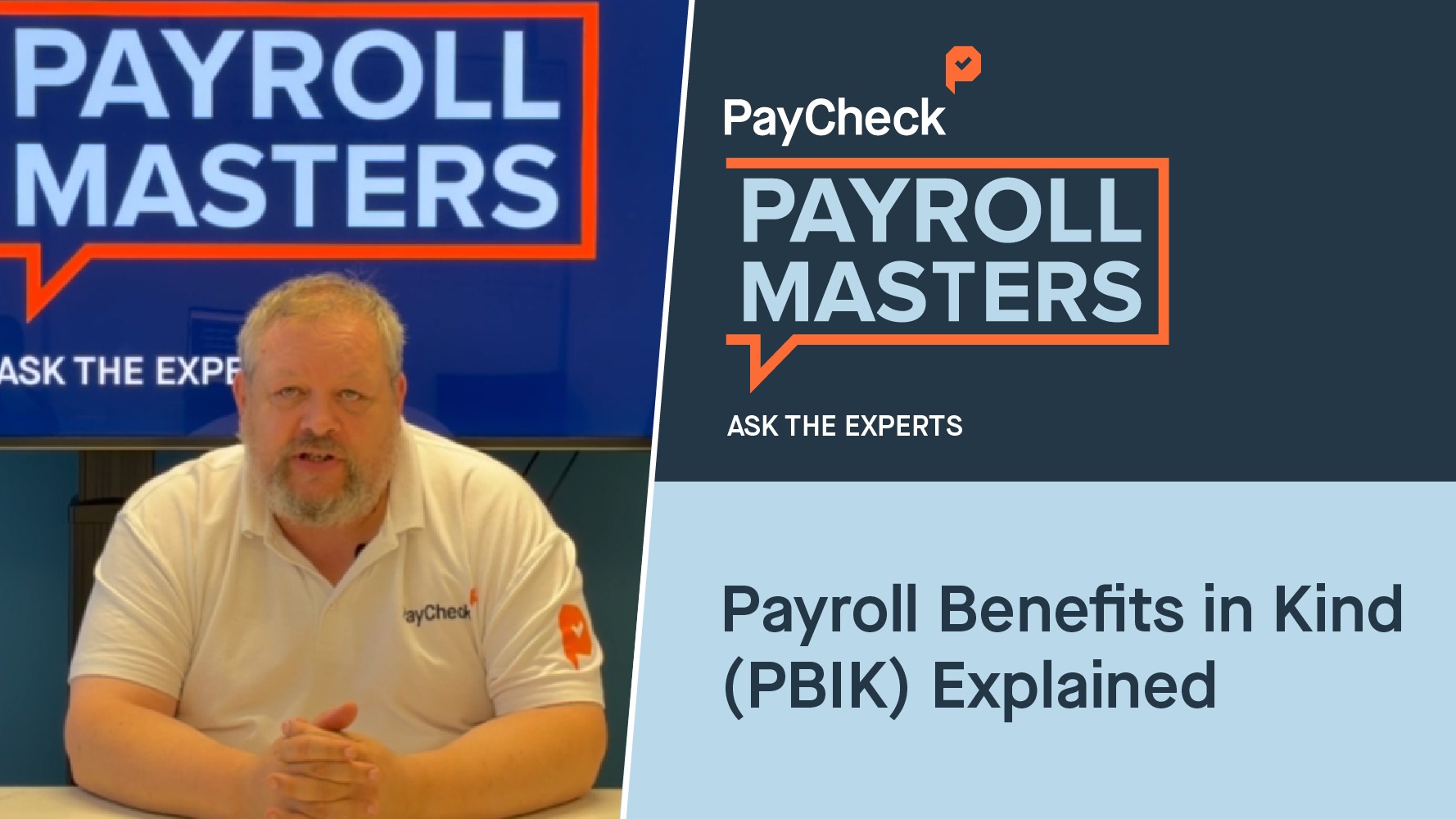
Payroll Master Mark Sapsford, Senior Business Development Manager at PayCheck, has over 25 years of experience in the payroll and HR industry. In this video, Mark explains what Payrolling Benefits in Kind (PBIK) are, how they work, and how they can help employers simplify the taxation of employee benefits.
Understanding Benefits in Kind
Many employers offer benefits in addition to salary as part of their employee reward package. These benefits can help attract and retain talent while supporting employee wellbeing and engagement.
Common Benefits in Kind include:
- Company cars
- Private medical insurance
- Company-funded health plans
- Low-interest loans
- Gym memberships
- Other employee perks and benefits
Because these benefits have a taxable value, employers must report them to HMRC and ensure the correct amount of tax is paid.
Traditionally, this process involved year-end reporting, but thanks to Payrolling Benefits in Kind (PBIK), employers now have a more streamlined option.
What Are Payrolling Benefits in Kind?
Payrolling Benefits in Kind allows employers to process the tax due on employee benefits through payroll during the tax year.
Historically, employers would report benefits after the end of the tax year using a P11D form. HMRC would then adjust the employee’s tax code to collect the tax owed.
With PBIK, the taxable value of benefits is included within payroll calculations throughout the year, meaning employees pay the tax as they go via PAYE.
As a result, employees are less likely to face unexpected tax code adjustments or underpayments from HMRC later on.
How Does PBIK Work?
Once an employer has registered for PBIK with HMRC and configured their payroll system correctly, the value of eligible benefits is included in payroll calculations.
This means:
- Tax on benefits is collected throughout the year
- Employees see the impact of benefits in real time
- HMRC receives PAYE information as part of normal payroll reporting
- Employers reduce the need for year-end reporting on those benefits
The process creates greater visibility for both employers and employees while helping ensure taxes are paid at the correct time.
Benefits of Payrolling Benefits in Kind
Improved Employee Experience
One of the main advantages of PBIK is that employees pay tax on benefits gradually throughout the year.
Rather than receiving an unexpected tax bill or tax code adjustment from HMRC, the tax is spread across regular payroll periods, making it easier to understand and manage.
Reduced Administration
For employers, PBIK can simplify payroll administration by reducing the need to complete P11D forms for benefits that have been payrolled.
This can save valuable time at year-end and help payroll teams work more efficiently.
Greater Accuracy
Collecting tax through payroll can reduce the need for HMRC corrections and tax code adjustments, helping improve accuracy for both employers and employees.
Better Visibility
By processing benefits through payroll, employers can monitor benefit-related taxation throughout the year rather than dealing with everything after the tax year has ended.
What Do Employers Need to Do Before Using PBIK?
Before you can payroll employee benefits, there are a few important steps to complete.
Register with HMRC
Employers must register with HMRC before they begin payrolling benefits.
Review Payroll Systems
Your payroll system must be capable of processing benefits correctly and reporting them as required.
Identify Eligible Benefits
Not all benefits are treated in the same way, so it’s important to understand which benefits can be payrolled and how they should be reported.
Working with an experienced payroll provider can help ensure the setup process is completed correctly from the outset.
Is P11D Reporting Still Required?
A common misconception is that Payrolling Benefits in Kind completely removes all P11D obligations.
While payrolling benefits can significantly reduce P11D reporting requirements, employers may still need to:
- Submit a P11D(b)
- Calculate and pay Class 1A National Insurance Contributions
- Maintain records of benefits provided
It’s therefore important to ensure all reporting obligations continue to be met, even when benefits are processed through payroll.
Common Benefits That Can Be Payrolled
Many employers choose to payroll benefits such as:
- Company cars
- Private medical insurance
- Fuel benefits
- Workplace accommodation
- Low-interest loans
- Certain other taxable benefits
The suitability of each benefit should be reviewed carefully as part of your payroll and compliance processes.
Why Payroll Expertise Matters
Benefits taxation can be one of the more complex areas of payroll compliance.
Incorrect reporting or calculations can result in:
- HMRC queries
- Payroll errors
- Additional administration
- Employee confusion
With the right payroll processes and expert support, Payrolling Benefits in Kind can simplify reporting while improving accuracy and compliance.
How PayCheck Can Help
At PayCheck, we help businesses manage all aspects of payroll compliance, including Payrolling Benefits in Kind.
Our experienced team can support you with:
✅ PBIK registration and setup
✅ Payroll processing and reporting
✅ Employee benefit administration
✅ P11D and P11D(b) obligations
✅ Class 1A National Insurance calculations
✅ Ongoing payroll compliance support
Like any area of payroll compliance, success comes from ensuring everything is set up correctly and managed consistently.
Whether you’re considering implementing PBIK for the first time or reviewing your existing payroll processes, we’re here to help.
Get in touch with PayCheck today and discover how our expert payroll team can help simplify your payroll and benefits administration.

Insights from Payroll Master
Mark Sapsford | Sr.Business Development Manager